Who was he?
William “Bill” Shankly (1913-1981), a child of the Ayrshire mining village of Glenbuck, in Scotland, managed Liverpool FC from December 1959 to 1974. He took over a club languishing in the Second Division, brought it up in 1962 and gave it three League titles, two FA Cups and a UEFA Cup. He is also credited, so they say, with the all-red kit, which is no small thing for a man who detested frivolity.
A frame of mind
Iron standards, a pilgrim's fervour, and that deadpan humour the British wield as others wield the foil: one never quite knows whether he is joking, and therein lies the pleasure. Shankly left nothing to chance, save the business of making his players laugh before a match.
Shankly called himself a socialist, and made no secret of it (not political socialism, which he distrusted, but mutual help and shared reward: everyone works for all, and all share in the fruits of the effort; see LFChistory, “The man”). We salute the man here, his standards and his spirit, without lending him convictions that were not his.
In his own words
Shankly's most famous line almost always circulates in an embellished form (“Some people believe football is a matter of life and death…”). Here is what he actually said, on television, four months before his death, and in a tone of regret: he was speaking of his family, sacrificed to football.
“Somebody said that football's a matter of life and death to you. I said, 'Listen, it's more important than that.'”
“Entertainment you can laugh at. I don't laugh at football.”
“It is a way of life. And it's so serious that it's unbelievable.”
The Liverpool way
When Shankly arrived in December 1959, Liverpool were languishing in the Second Division and Anfield was falling to pieces. Fifteen years later, he left behind a club that knew who it was. The secret was no great mystery: work, more work, a simple game, passes given and received, and the idea that each man answers for the whole. The collective does not crush the individual; it gives him a place, and a reason to surpass himself.
He minded the symbols, too. In 1972 he had a red sign put up above the players' tunnel, bearing three words: This Is Anfield. A member of staff had suggested “Welcome to Anfield”; Shankly found it rather too hospitable. The sign was there to remind his own men whom they were playing for, and visitors whom they were up against.
And then there is the Kop, the great standing terrace where Shankly said he felt at home. In the early 1960s its supporters took up You'll Never Walk Alone, a show tune (Carousel, Rodgers and Hammerstein, 1945) covered by the local band Gerry and the Pacemakers, a UK number one in 1963. It has become the club's motto; it stands on its gates and on its crest.
A rugby mindset
This is our view, not established fact: the spirit Shankly instilled gives footballers something of a rugby player's mindset. Combativeness first, that refusal to give up on a ball one thinks lost. Solidarity next, the kind that makes a man run thirty metres to cover a teammate's mistake. Self-denial, which prefers the useful touch to the brilliant one. Respect, finally: for the opponent, the referee, the shirt. A round ball, admittedly; but a dressing room that resembles a tightly bound scrum.
The people of Liverpool
Liverpool was born of a royal charter granted by King John in 1207. In the eighteenth and nineteenth centuries it became one of the foremost ports in the world, the Atlantic gateway through which passed the goods of the Empire and millions of emigrants bound for America. This port also has a dark side, which ought not to be passed over in silence: it was one of the centres of the slave trade, a memory now kept by the International Slavery Museum.
Its people call themselves Scousers, after scouse, a sailors' stew descended from lobscouse. A city of Irish, Welsh and Scottish immigration, a working city heavily bombed in 1941, sorely tried by the decline of the docks in the 1970s and 1980s, it has risen again every time, with a pride and a humour all its own.
On 15 April 1989, at Hillsborough stadium in Sheffield, 97 Liverpool supporters lost their lives. In 2016 the inquests concluded that they had been unlawfully killed, and that the supporters bore no responsibility whatsoever for the disaster. Their families fought that battle for twenty-seven years.
A proud people, in whom I fully recognise myself.
The Royal Liver Building
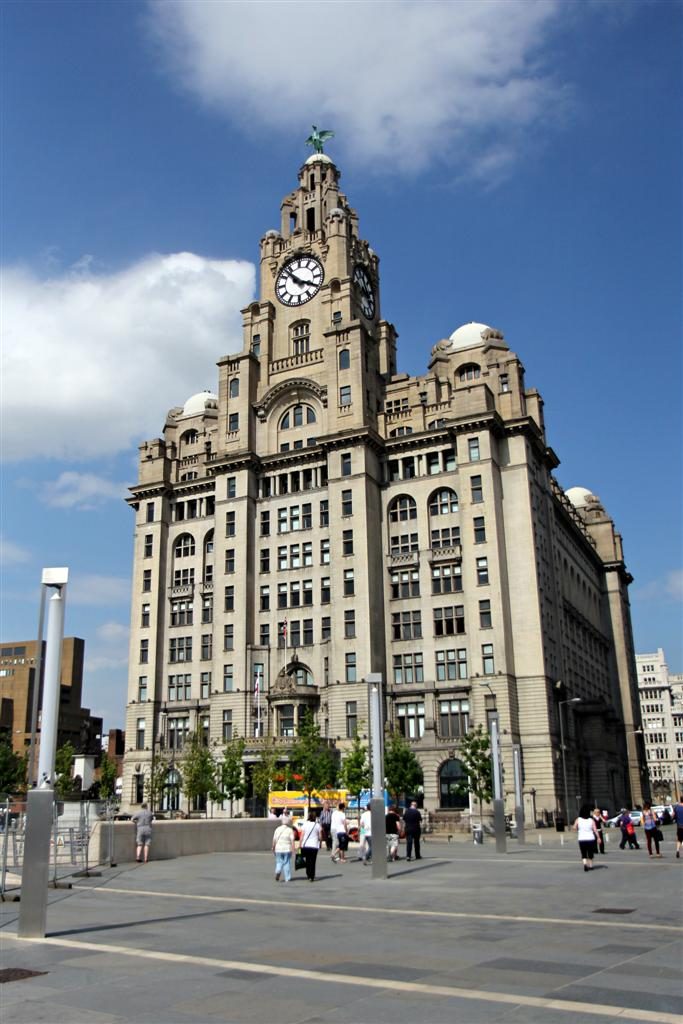
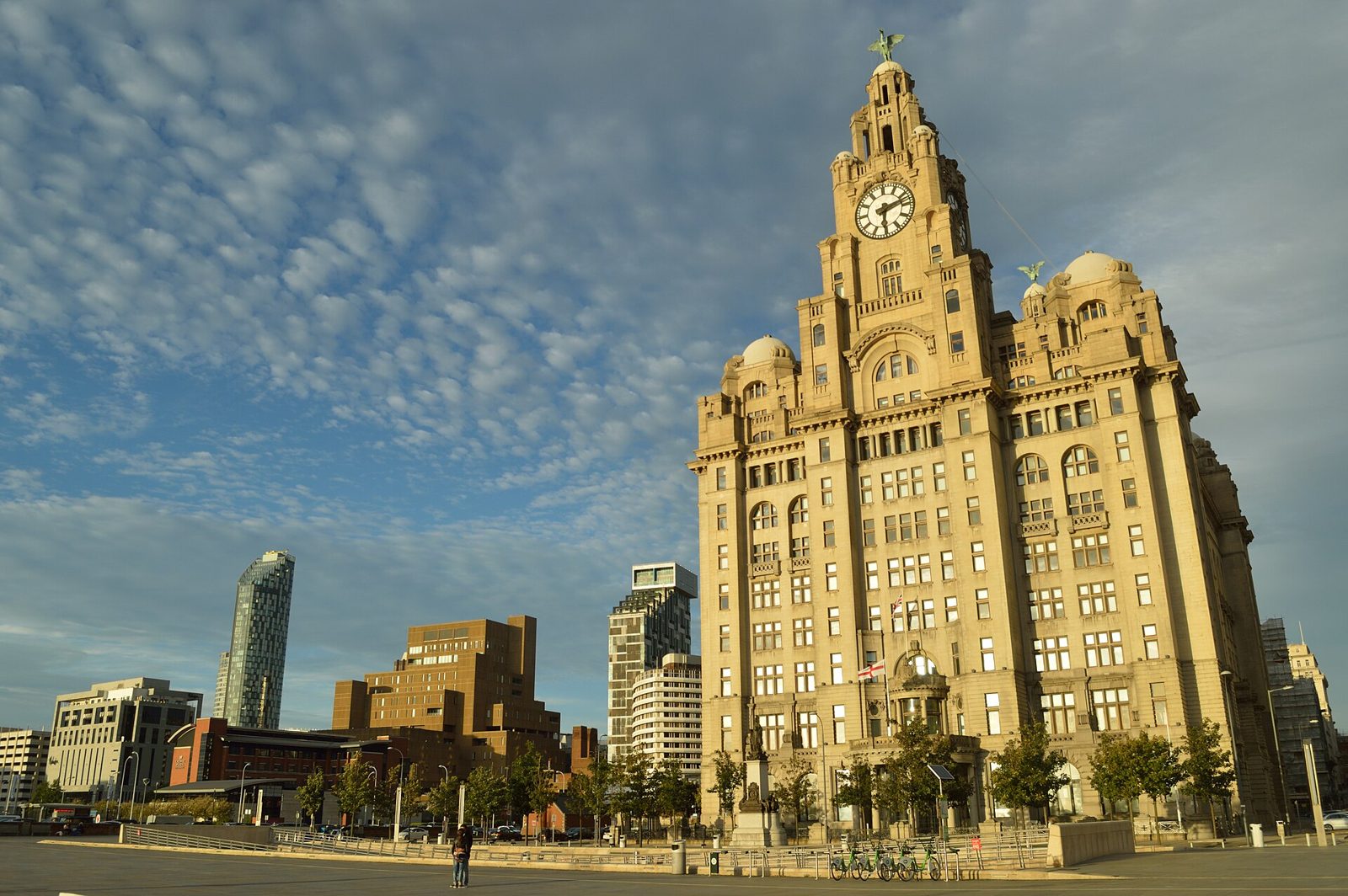
On the Pier Head, facing the Mersey, the Royal Liver Building was built between 1908 and 1911 for the Royal Liver Assurance, to designs by Walter Aubrey Thomas. It was one of the first large reinforced-concrete buildings in the country. Its two clock towers bear the Liver Birds, mythical creatures that became the emblem of the city (and of the club), designed by Carl Bernard Bartels; one looks out to sea, the other over the city. Listed Grade I, it forms, with the Cunard Building and the Port of Liverpool Building, the “Three Graces” of the waterfront.
Sources
- The Mirror: the exact quotation and its context (Live at Two, 20 May 1981)
- LFChistory.net: “Own words”, transcript of the programme
- Wikipedia: Bill Shankly
- Liverpool FC: “How Bill Shankly changed Anfield”
- This Is Anfield, September 2026: the original 1972 sign
- Wikipedia: You'll Never Walk Alone
- Wikipedia: Liverpool
- International Slavery Museum
- Wikipedia: Hillsborough disaster (the 2016 inquests)
- Wikipedia: Royal Liver Building
- Geograph: note on the Royal Liver Building